The Basics (What you NEED to know)
DESCRIPTION
MDMA, or 'ecstasy' is a 'psychedelic amphetamine' that has gained popularity over the past 20 years because of its ability to produce strong feelings of comfort, empathy, and connection to others. It most frequently comes in tablet form, although it is occasionally sold in capsules or as powder. It is most frequently used orally and rarely snorted. MDMA use is closely tied to the underground rave (and dance club) scene throughout the world, but has also been widely used by therapists as an adjunct to psychotherapy.

Because MDMA is so popular and because it goes well with dance parties, the demand for it usually exceeds supply--especially at any given location on any given night. This creates an opening for unscrupulous individuals to sell virtually anything as 'ecstasy'. While 'ecstasy' is the popular name for MDMA, the functional definition of ecstasy is any pill represented as MDMA on the street. Ecstasy pills are notoriously unreliable in content, more so than most other street drugs, and commonly contain either caffeine, ephedrine, amphetamines, MDA, MDE, DXM, or -- in rare cases -- DOB, and don't necessarily contain MDMA or any psychoactive. This problem has led to the development of simple MDMA testing kits that may help give the user a general sense of the content of a pill.
Dose
A standard oral dose of MDMA is between 80 - 150 mg. Most good quality pills contain somewhere in this range, generally 80-120 mg. A large percentage of users find that, unlike with many other psychoactives such as LSD or mushrooms, there is a 'sweet spot' in MDMA dosage. Once this spot is found, higher dosages are not particularly desirable as they don't increase the sought after effects or duration.

Price
The price of MDMA varies wildly depending on where it's purchased and in what quantity. A single tablet bought at a rave can cost as much as $50 though more commonly $20-$30. Purchased in higher quantities MDMA generally sells for $100-$250 per gram (about $10-25 per dose), with wholesale prices as low as $50
Law
MDMA is illegal in the United States (Schedule I) and in most other countries. It is also listed as Schedule I in the International Convention on Psychotropic Substances, an international drug control treaty.
Chemistry
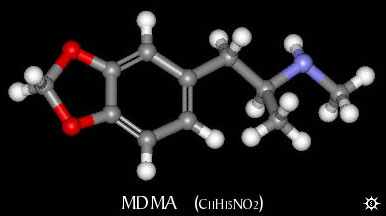
3,4-methylenedioxy-N-methamphetamine (MDMA) is a synthetic chemical that can be derived from an essential oil of the sassafras tree.
History
MDMA was first synthesized and patented by Merck pharmaceuticals in 1912 and patented in 1914, but it wasn't until the mid 1970s that articles related to its psychoactivity began showing up in scholarly journals. In the late '70s and early '80s MDMA was used as a psychotherapeutic tool and also started to become available on the street. Its growing popularity led to it being made illegal in the United States in 1985 and its popularity has continued to increase since then.
Slang
The Substance : MDMA, ecstasy, X, XTC, E, M, adam, bean, roll
The Experience : X-ing, rolling, tripping, wigging
EFFECTS
Onset
Depending on how much and how recently one has eaten, MDMA generally takes 30-60 minutes (although sometimes as long as 2 hours) to take effect. Unlike with many other psychoactives, the onset of MDMA is very quick. Often at the point one realizes that perhaps they are starting to notice effects, they are already 'launching' quickly towards the peak. This quick and extremely sharp 'launch' can be unnerving, feeling a bit like it's too quick and hard to know when it's going to end, but the feeling generally only lasts a few minutes until the full effects are reached.Duration
The primary effects of MDMA last approximately 3-4 hours when taken orally. For many people there is an additional period of time (2-6 hrs) where it is difficult to go to sleep and there is definitely a noticeable difference from everyday reality, but which is not strong enough to be considered 'tripping'. Many people also experience a noticeable shift in mood for several days after use; for some this is a period of depression while others experience lifted mood.The Experience
When the full effects of MDMA manifest, barring an uncommon negative reaction, users are likely to find that suddenly everything is right with the world. The primary effects sought by those using MDMA recreationally are the emotional openness, euphoria, stimulation, reduction of critical and cynical thoughts, and decrease of inhibitions that can accompany its use. MDMA is used by some individuals in a therapeutic setting to attempt to work through difficult interpersonal issues. Although MDMA can cause nystagmus (eye wiggles), most individuals experience few prominent open or closed eye visuals. A small percentage of users report significant visual distortions.The Crash
Some users of MDMA experience a dramatic worsening of mood as the peak effects wear off, often called the "crash". This is often the result of coming down from a wonderful experience, not wanting the feelings to go away, and being sad, scared, or annoyed afterwards. Crashes do not happen after every experience and some users never experience them. One of the primary problems associated with crashing is that some users find themselves redosing in order to stave it off.Hangover and the Week After
Many users report feeling extremely drained the day after MDMA use. This 'day after' effect means for many MDMA users that they need to plan 2 days for the experience: one for the peak experience and one recovery day, with very little planned. Many users also experience some level of post-MDMA depression, often starting on the second day after the experience and lasting for up to 5 days. A small percentage of users report depressive symptoms for weeks afterwards. Alternately, some users report feeling better than normal for a week or so after taking MDMA. The negative after-effects of taking MDMA appear to be worse with higher frequencies of use, higher dosages, and perhaps total lifetime usage.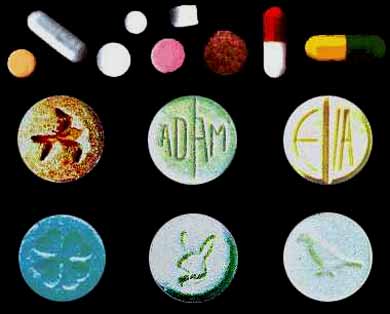
PURITY ISSUES
One of the primary problems with MDMA is the low quality of the material sold on the street to recreational users. Tablets of street "ecstasy" frequently contain an assortment of psychoactive substances, either mixed with MDMA, or in place of it, or may contain no active ingredients at all. Other substances found in street ecstasy include MDA, MDE, PMA, caffeine, ephedrine, amphetamines, DXM, and occasionally DOB.Caffeine, ephedrine, and amphetamines will produce less empathic effects than MDMA with more stimulation and feelings of restlessness. MDA and MDE are both similar in effects to MDMA and it may be difficult for even experienced users to distinguish between them. MDE is slightly shorter in duration than MDMA and generally has a lower peak and less euphoria than MDMA. MDA lasts longer and generally produces more visuals and psychedelic effects than MDMA. The effects of DXM, which has become more common in street ecstasy, can be extremely unpleasant if you're not expecting them: strong disorientation, dizziness, nausea, grogginess or strong sedation, and at high enough doses, dissociation from the body.

|
||
 |
 |
 |
 |
||